JHD Counselling Services is a highly recognised brand with a vastly experienced team.


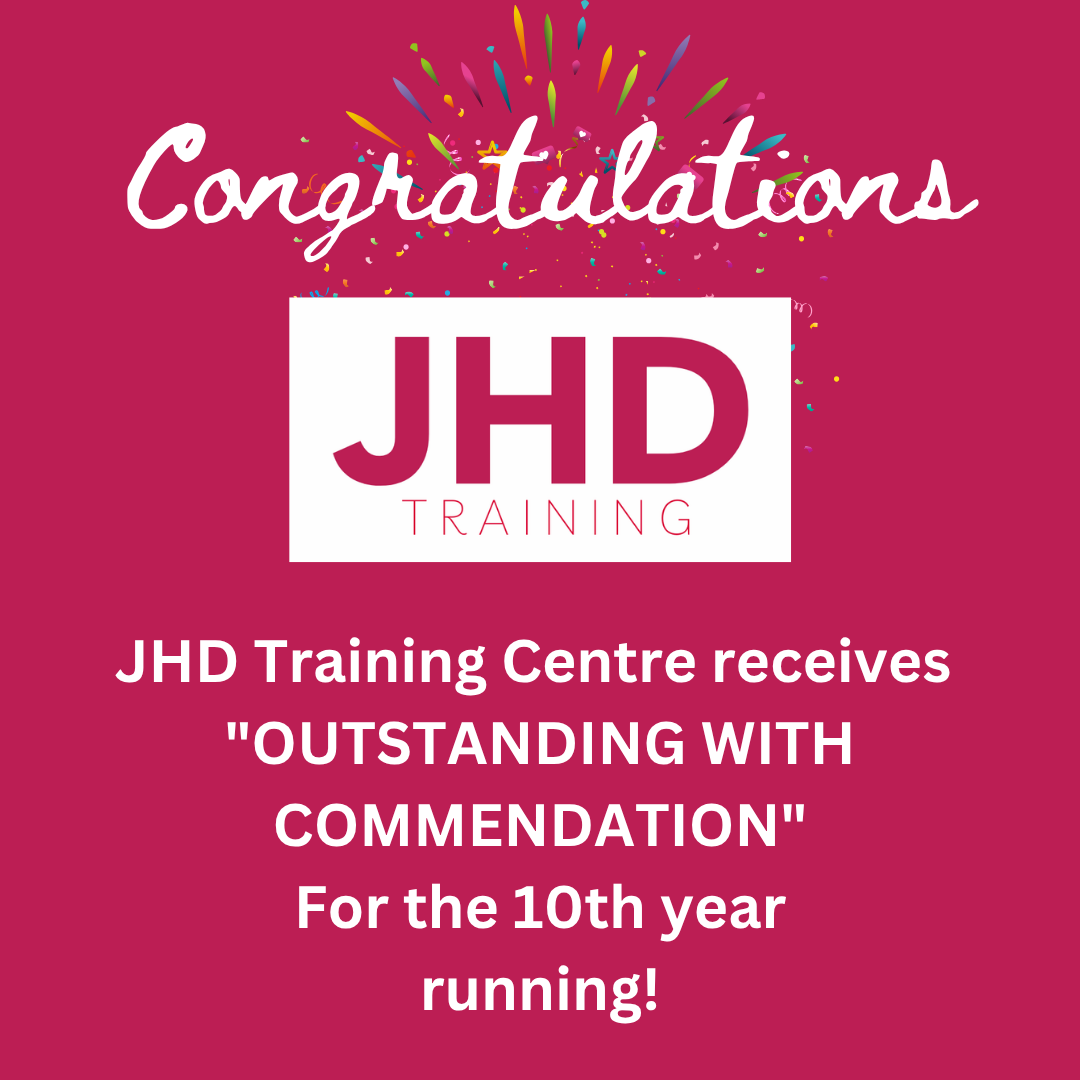
JHD Counselling is a national counselling trainer provider having received "Outstanding with commendation" for the past 9 years.


We offer a wide range of counselling training courses plus we will be launching many CPD workshops which will appeal to budding counsellors, businesses and organisations.


COUNSELLING TRAINING

WHAT CHD COUNSELLING OFFERS

We are experts in

Counselling Training

We offer everything you need to support you in achieving your qualification. Whether you are looking to start your training at Level 1 or looking to study your diploma course and become a fully qualified counsellor. 


quotesArtboard 1 copy 2

Launch Your Counselling Career:
September 2026 & January 2027 Courses

We are excited to open registrations for our upcoming academic year! Whether you are a beginner or looking to specialise, JHD Training provides a proven, supportive path to becoming a qualified professional.

September 2026 Intake

  • Level 2/3 Counselling Skills: The essential first step for those starting their training journey or enhancing communication in professional roles.
  • Level 4 Diploma in Therapeutic Counselling (Fast Track): A robust, one-year intensive course.
  • Includes 450 hours of supported learning.
  • Comprehensive support for your supervision and clinical placements.
  • Level 4/5 Mental Health and Trauma: A combined pathway to fast-track your specialist expertise.
  • Level 5 Mental Health and Trauma (Standalone): Advanced specialist training for qualified practitioners.

January 2027 Intake

  • Level 5 Children and Young People (CYP): Specialist training for working with the next generation.

Why Choose JHD Training?

We don’t just teach; we mentor. Our academy is built on a legacy of excellence and a genuine commitment to your success.

  • 9 Years of Excellence: We have consistently received "Outstanding" feedback from external verifiers for nearly a decade.
  • Student-First Approach: We deeply care about our trainees and offer tailored support throughout your entire counselling journey.
  • Expert Mentorship: Learn from seasoned professionals in a community that values "order for growth".

Register Your Interest

Spaces on our high-demand courses fill up quickly. To find out more about fees, interview dates, and requirements, please contact our team:

📧 Email: secretary@jhdcounselling.co.uk

Join a training provider where your professional legacy begins.

JHD News
by Lauren Speller 2 May 2026
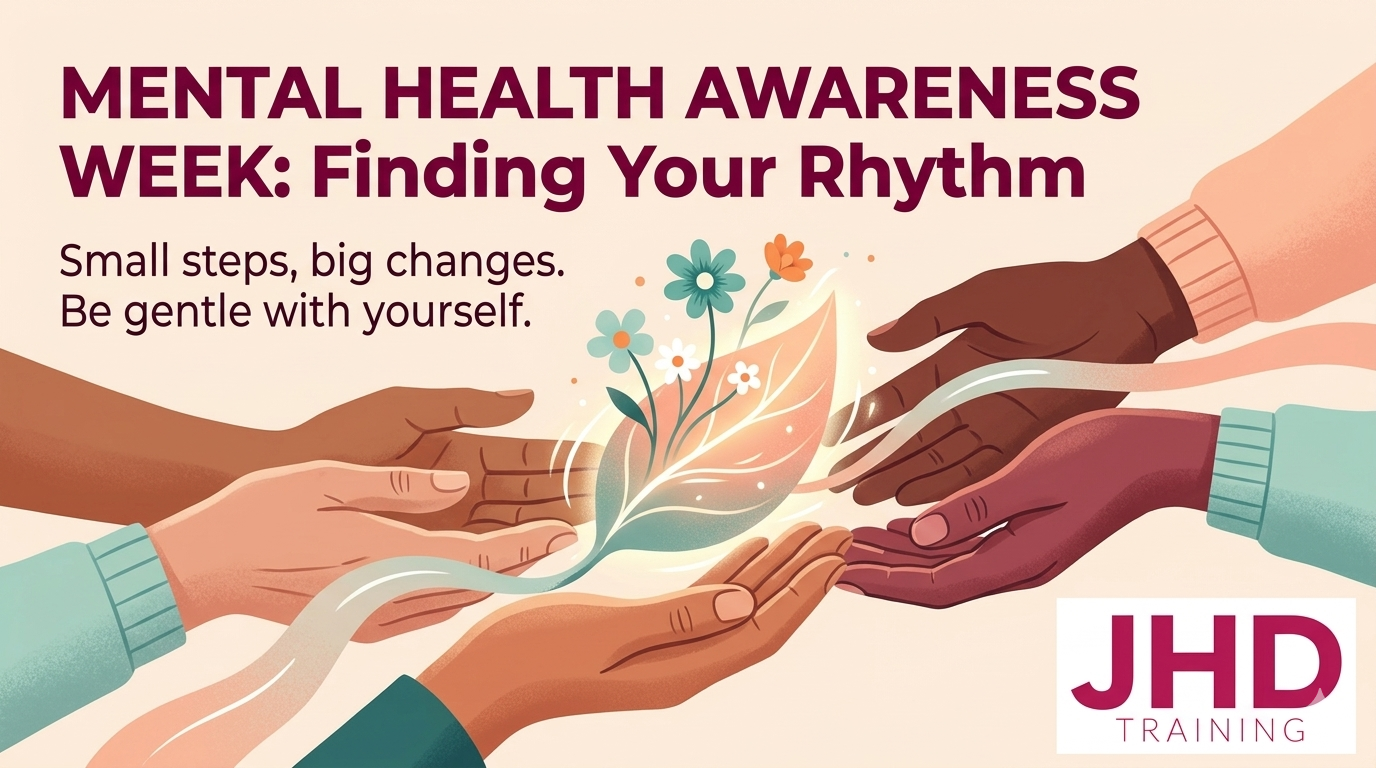
Following the theme of Movement for Mental Health Awareness Week, we want to talk about another vital ingredient for our well-being: Connection. When we move, we often feel better, but when we move together—or simply share our journey with another human—that's where the real magic happens. At JHD Training, we often see that the biggest hurdle for those struggling with mental health isn't a lack of strength; it’s the heavy blanket of silence and isolation. Whether it's the stigma surrounding self-harm, the cycle of OCD, or the unspoken pain of emotional abuse, the "human" part of us thrives when it is seen and heard. Breaking the Silence We are all human, and we all reach our limits. Sometimes, stress doesn't just feel like a busy mind; it manifests as physical pain or a feeling of being completely stuck. You are not a burden: Reaching out for help is a sign of immense courage, not a weakness. Listen without judgment: If someone opens up to you, your greatest gift is simply hearing their words without trying to "fix" or judge them. Hope exists: Even when your brain tells you otherwise, there is always a path forward. A Legacy of Support For the last 9 years , JHD Training has received "Outstanding" feedback from external verifiers. Why? Because we care deeply about our trainees and their individual counselling journeys. We believe that "order leads to growth," and that order starts with a safe, supportive community. Whether you are a professional looking to better support your staff, or an individual ready to start a new career, your journey is important to us. Upcoming Training Opportunities Ready to join a community that puts people first? Our September 2026 intake is now open for registration:  Level 2/3 Counselling Skills: Build the foundation to support others confidently. Level 4 Fast Track: A one-year intensive path including 450 hours of supported learning , supervision, and placements. Level 4/5 Mental Health and Trauma: Specialized training to understand the deep impact of trauma. 📧 Email secretary@jhdcounselling.co.uk to join an "Outstanding" legacy of care.
by Lauren Speller 2 May 2026
Movement: Moving More for Our Mental Health
12 October 2025
Obsessive-Compulsive Disorder, or OCD , is a mental health condition that is often misunderstood. It's more than just being "a little neat" or "a bit of a clean freak." For those who live with it, OCD is a debilitating cycle of unwanted thoughts and repetitive behaviours that can seriously disrupt daily life. Understanding this cycle is the first step toward reclaiming control. What Exactly is OCD? OCD is defined by a pattern that has two main parts: obsessions and compulsions . 1. Obsessions These are unwanted, intrusive, and distressing thoughts, images, or urges that repeatedly enter your mind. They cause intense anxiety, fear, or disgust. Common obsessions include: Contamination fears (e.g., fear of germs, dirt, or illness). Harm obsessions (e.g., fear of accidentally or deliberately hurting yourself or others). A need for symmetry, order, or "just-right" feelings. Unwanted aggressive, sexual, or religious thoughts (sometimes called scrupulosity). It is crucial to remember that these thoughts are ego-dystonic —they go against the person's true values, character, and intentions. They are thoughts, not facts. 2. Compulsions These are repetitive behaviours or mental acts that a person feels driven to perform in response to the obsession. The goal of a compulsion is to temporarily reduce the anxiety caused by the obsession or to prevent a feared event from happening. Common compulsions include: Excessive cleaning and hand-washing. Repeatedly checking locks, appliances, or safety measures. Ordering and arranging objects in a precise way. Mental rituals like counting, repeating phrases, or 'neutralizing' a bad thought. Excessively seeking reassurance from others. The cycle looks like this: Obsession → Anxiety → Compulsion → Temporary Relief → Obsession Returns. The compulsion only reinforces the idea that the obsession was a real threat that needed to be addressed. What Helps with OCD Management? If you are struggling with OCD, help is available. While it can feel overwhelming, evidence-based treatments and self-help strategies can significantly improve your quality of life. The Gold Standard Treatment The most effective, evidence-based treatment for OCD is a form of Cognitive Behavioural Therapy (CBT) called Exposure and Response Prevention (ERP) . Exposure (E): This involves gradually and repeatedly confronting the thoughts, images, objects, or situations that cause your obsessions and anxiety. Response Prevention (RP): This means choosing to resist the urge to perform the compulsion or ritual that usually follows the exposure. For example, a person with contamination fears might be asked to lightly touch a doorknob (exposure) and then be guided by the therapist to not wash their hands for a set amount of time (response prevention). Over time and with practice, the anxiety naturally decreases, and the brain learns that the feared consequence does not occur, thus breaking the cycle. This should always be done with a therapist trained in ERP. In some cases, Selective Serotonin Reuptake Inhibitors (SSRIs) , a type of antidepressant medication, may be prescribed by a doctor to help reduce anxiety and allow the person to engage more effectively in therapy. Often, a combination of ERP and medication is the most effective approach. Practical Self-Help Strategies While professional treatment is essential, there are daily self-help strategies that can support your recovery: 1. Accept the Thoughts, Resist the Response Practice 'Un-Fusing' from Thoughts: Recognise an obsessive thought as simply a thought, not a command or a reflection of reality. You can say to yourself, "That's just my OCD thought about germs," instead of engaging with the thought's content. Embrace Uncertainty: OCD thrives on the need for 100% certainty. You can counter this by intentionally introducing and accepting small amounts of doubt. Use phrases like, "Maybe that's true, maybe it isn't. I'm going to choose to move on anyway." Delay the Compulsion: If resisting a compulsion entirely feels impossible, try delaying it. Say, "I will do this in 5 minutes," and gradually increase the delay time. 2. Build Healthy Habits Mindfulness: Practising mindfulness helps you focus on the present moment without judgement. This can reduce the tendency to get carried away by anxious thoughts about the past or future. Sleep and Nutrition: Ensure you are getting adequate sleep and a balanced diet. Fatigue and low blood sugar can exacerbate stress and anxiety, making OCD symptoms feel worse. Movement: Regular physical activity is a powerful stress reducer and can help regulate mood and anxiety levels. 3. Cultivate Support Connect with Trusted People: OCD is isolating. Talk about your struggles with a trusted friend, family member, or join an OCD support group . Sharing your experience can reduce feelings of shame and isolation. Avoid Excessive Reassurance Seeking: While reassurance provides temporary relief, it is a form of compulsion and strengthens the OCD cycle. Gently ask loved ones to stop giving reassurance and instead offer distraction or emotional support. If you believe you or a loved one may be affected by OCD, the most important step is to speak with a healthcare professional or a specialist who can provide a diagnosis and guide you to a qualified ERP therapist. You don't have to face this alone.
Show More