
How to Deal with Insecurity in a Relationship

Insecurity is a common human emotion that can affect anyone, regardless of their relationship status. However, when insecurity rears its ugly head in a relationship, it can be especially damaging.

If you're struggling with insecurity in your relationship, here are some tips on how to deal with it in a healthy way:

  • Identify the source of your insecurity. The first step to overcoming insecurity is to identify what's causing it. Are you feeling insecure about your appearance? Your personality? Your partner's past relationships? Once you know what's causing your insecurity, you can start to address it.
  • Challenge your negative thoughts. When you start to feel insecure, it's important to challenge your negative thoughts. Ask yourself if they're really true, or if they're just your insecurities talking. For example, if you're feeling insecure about your partner's attraction to you, ask yourself if there's any evidence to support that belief. If not, then try to replace that thought with a more positive one.
  • Build your self-esteem. One of the best ways to overcome insecurity is to build your self-esteem. This means focusing on your strengths and accomplishments, and learning to love and accept yourself for who you are. There are many things you can do to build your self-esteem, such as exercise, meditation, and spending time with positive people.
  • Communicate with your partner. If your insecurity is causing problems in your relationship, it's important to communicate with your partner about it. Let them know how you're feeling, and ask for their support. A good partner will be understanding and willing to help you work through your insecurities.
  • Seek professional help if needed. If you're struggling to overcome your insecurity on your own, don't be afraid to seek professional help. A therapist can help you understand the root of your insecurity and develop healthy coping mechanisms.

Remember, insecurity is a normal human emotion. But it doesn't have to control your life or your relationships. By following these tips, you can learn to deal with insecurity in a healthy way and build a strong, happy relationship.

Here are some additional tips for dealing with insecurity in a relationship:

  • Be patient with yourself. It takes time to overcome insecurity. Don't expect to change overnight.
  • Don't compare yourself to others. Everyone is different, and there's no such thing as a perfect person.
  • Focus on the positive aspects of your relationship. What do you love about your partner? What do you appreciate about your relationship?
  • Take care of yourself. Make sure you're getting enough sleep, eating healthy foods, and exercising regularly. Taking care of your physical and mental health will help you feel better about yourself overall.

If you're struggling with insecurity in your relationship, know that you're not alone. There are many people who have been there and overcome it. With time, effort, and support, you can too. JHD Counselling are always here with a listening ear

7 May 2026
In our previous post, we spoke about finding your rhythm through movement. This week, as we continue to mark Mental Health Awareness Week , JHD Training wants to address the invisible weight that so many of us carry: the pressure to be "fine." Whether you are a professional in a high-stress role, a parent supporting a family, or a student navigating your own path, societal expectations often tell us to be the "strong and silent" type. At JHD, we know that true strength isn't found in silence; it’s found in the courage to speak up. Recognising the Signs Stress and trauma don't always look like a crisis. Sometimes they manifest in subtle ways that we might dismiss: Physical Pain: Unexplained tension, headaches, or exhaustion can often be your body’s way of saying it has reached its limit. The Cycle of Silence: Withdrawing from friends or family because you feel like a "burden" is a common but dangerous path toward isolation. Time Blindness: Especially for those of us navigating neurodiversity, like ADHD, the feeling of being "stuck" or overwhelmed by manual admin can cause significant mental strain. Building a Safe Space For nearly a decade, JHD has been consistently rated "Outstanding" by external verifiers because we don't just teach counselling skills—we foster a culture of safety. We believe that "Order leads to growth" . By creating order in our minds and our environments, we create the space needed for healing. Take the Next Step If you have been waiting for a sign to prioritise your mental well-being, this is it. Listen to your body: If you are tired, take a break. Challenge the stigma: Whether it’s OCD, self-harm, or emotional abuse, no topic is too "heavy" for a professional to help you navigate. Invest in your future: Join a community that cares about your legacy.
7 May 2026
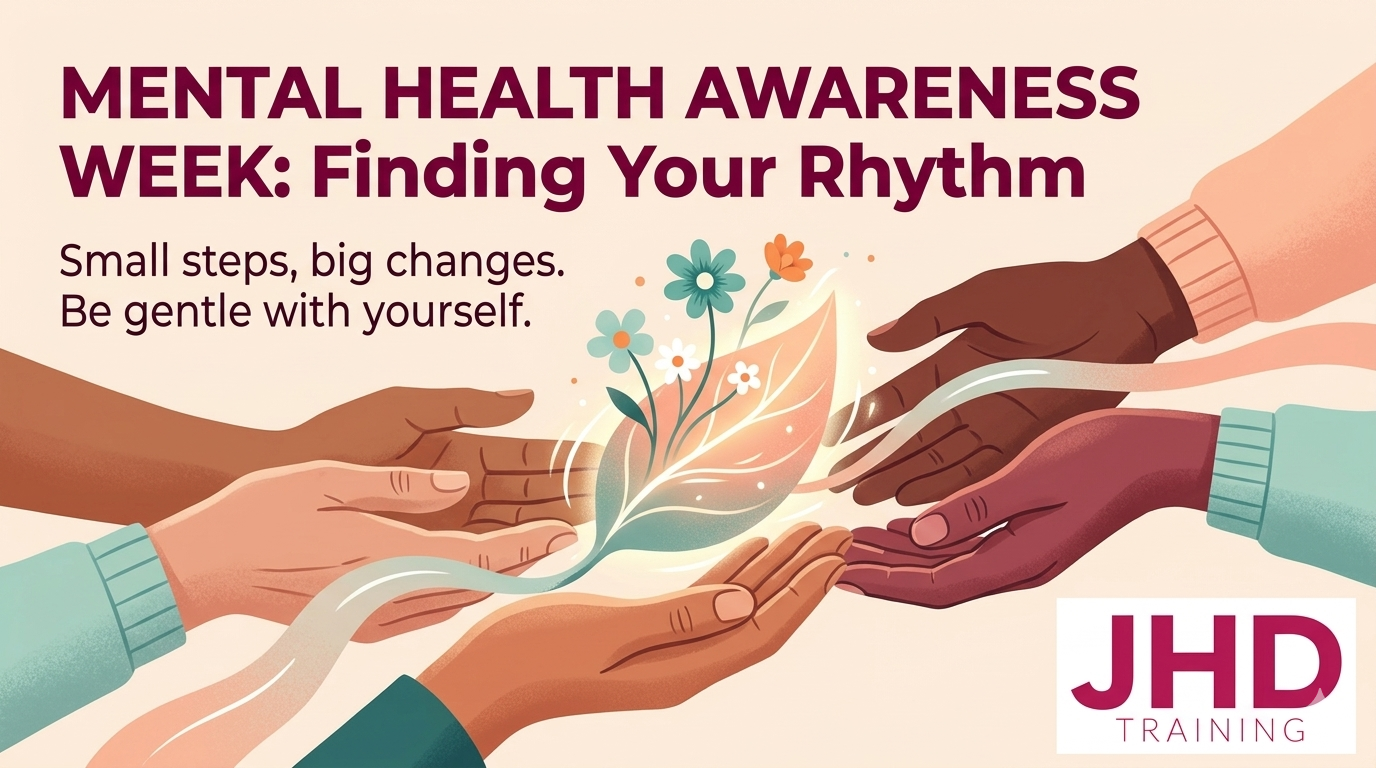
As Mental Health Awareness Week approaches, the spotlight is on a theme that connects every one of us: Finding Your Rhythm .  At JHD Training, we have spent nearly a decade supporting the counselling journey of our trainees. Our constant "Outstanding" feedback from external verifiers isn't just about the professional success of our graduates; it's about the genuine care and support we prioritize for the people behind the practitioner. When life feels intense or overwhelming, it is easy to fall into a pattern of judgment—either for feeling too much or, conversely, for feeling "numb." This week, we want to lend our support to you, the public, by exploring simple, practical advice centered on Movement and Connection that helps you reclaim your pace without the weight of guilt. 1. Move for Your Mind (It's Not a Marathon) The term "movement" doesn't have to mean intense gym sessions. When you are struggling, even thinking about exercise can feel like a barrier. Overcome Motivation Slumps: If motivation is a hurdle, start with just one minute. A simple stretch, a quick walk in the garden, or even moving from your desk to a different chair counts. Grounding Through Action: Physical movement, however small, is a powerful form of grounding. It can shift you out of rumination and help reconnect your mind with the physical present. 2. The Courage to Connect Connection is another powerful pillar of well-being, yet it can be the first thing to suffer when we feel mentally exhausted. Reaching Out is Strength: The idea that you "should have it all together" is a stereotype we strive to break. If you are experiencing stress or anxiety, please reach out. Talking can prevent a feeling from escalating into silence and isolation. Listen Beyond the Words: If a loved one shares their struggle with you, your greatest gift is simply hearing their words without interruption or judgment. Being heard and validated is often the beginning of a healing path. Be Gentle with Yourself Remember, we are all human, and we all reach our limits. Healing is rarely a linear path. If your only movement today was taking a slow breath, that is a start. If you are struggling with deeper issues like the effects of trauma, please know that specialised support exists. We believe that order and compassion lead to profound growth. Find your rhythm this week, one small, gentle step at a time.
by Lauren Speller 2 May 2026
Following the theme of Movement for Mental Health Awareness Week, we want to talk about another vital ingredient for our well-being: Connection. When we move, we often feel better, but when we move together—or simply share our journey with another human—that's where the real magic happens. At JHD Training, we often see that the biggest hurdle for those struggling with mental health isn't a lack of strength; it’s the heavy blanket of silence and isolation. Whether it's the stigma surrounding self-harm, the cycle of OCD, or the unspoken pain of emotional abuse, the "human" part of us thrives when it is seen and heard. Breaking the Silence We are all human, and we all reach our limits. Sometimes, stress doesn't just feel like a busy mind; it manifests as physical pain or a feeling of being completely stuck. You are not a burden: Reaching out for help is a sign of immense courage, not a weakness. Listen without judgment: If someone opens up to you, your greatest gift is simply hearing their words without trying to "fix" or judge them. Hope exists: Even when your brain tells you otherwise, there is always a path forward. A Legacy of Support For the last 9 years , JHD Training has received "Outstanding" feedback from external verifiers. Why? Because we care deeply about our trainees and their individual counselling journeys. We believe that "order leads to growth," and that order starts with a safe, supportive community. Whether you are a professional looking to better support your staff, or an individual ready to start a new career, your journey is important to us. Upcoming Training Opportunities Ready to join a community that puts people first? Our September 2026 intake is now open for registration:  Level 2/3 Counselling Skills: Build the foundation to support others confidently. Level 4 Fast Track: A one-year intensive path including 450 hours of supported learning , supervision, and placements. Level 4/5 Mental Health and Trauma: Specialized training to understand the deep impact of trauma. 📧 Email secretary@jhdcounselling.co.uk to join an "Outstanding" legacy of care.