
The top ways for a student to combat stress during exam times
As a college or university student, exam times can be some of the most stressful periods of the academic year. With the pressure to perform well and meet academic expectations, it's easy to become overwhelmed and stressed out.
Here are some tips on how to combat stress during exam times:
- Plan and organise your time: One of the biggest stressors during exam times is feeling like you have too much to do and not enough time to do it. By creating a study schedule and breaking down your workload into manageable tasks, you can reduce stress and increase productivity.
- Take care of your physical health: During exam times, it's easy to neglect your physical health by staying up late, eating unhealthy foods, and skipping exercise. However, taking care of your body is crucial for managing stress. Make sure you get enough sleep, eat nutritious foods, and make time for exercise or other physical activities.
- Practice relaxation techniques: Incorporating relaxation techniques into your daily routine can help reduce stress levels. Consider trying techniques such as deep breathing exercises, yoga, meditation, or progressive muscle relaxation.
- Seek support from others: It's important to have a support system during exam times. Reach out to friends, family, or a counselor for emotional support and encouragement.
- Take breaks and engage in enjoyable activities: It's easy to become consumed by studying during exam times, but taking regular breaks and engaging in enjoyable activities can help alleviate stress. Schedule time for hobbies or activities that you enjoy, such as reading, watching a movie, or spending time with friends.
- Avoid procrastination: Procrastination can add unnecessary stress and pressure during exam times. By starting your studying and assignments early, you can avoid cramming and reduce stress levels.
In conclusion, managing stress during exam times is crucial for academic success and overall well-being. By implementing these tips and techniques, college students can reduce stress and improve their ability to perform well during exams. Remember to take care of your physical and emotional health, seek support from others, and prioritize self-care during this busy period.

JHD Training Achieves Landmark "Outstanding with Commendation" for 10 Consecutive Years 💼🏆 Quality assurance and academic excellence are the bedrocks of professional training. Today, we are proud to announce that JHD Training has been officially awarded the highest accolade of "Outstanding with Commendation" spanning the last decade . To maintain this level of distinction for 10 years requires rigorous clinical standards, a robust curriculum framework, and an unwavering student-first culture. It proves that our training pathways—from foundational skills to advanced diplomas—consistently deliver elite-level preparation for helping professionals. Why professionals choose our September 2026 pathways: Proven Frameworks: A decade of external verification means our training methods are completely trusted. Practitioner-Focused: We focus on developing safe, ethical, and deeply grounded therapists. Flexible Delivery: Offering both day and evening options for our Level 4 Diploma to fit around active professional careers. If you are looking to advance your organization's mental health qualifications, or step into a new professional chapter yourself, train with a team operating at the absolute pinnacle of the sector. 📧 For more information, please email: secretary@jhdcounselling.co.uk
In our previous post, we spoke about finding your rhythm through movement. This week, as we continue to mark Mental Health Awareness Week , JHD Training wants to address the invisible weight that so many of us carry: the pressure to be "fine." Whether you are a professional in a high-stress role, a parent supporting a family, or a student navigating your own path, societal expectations often tell us to be the "strong and silent" type. At JHD, we know that true strength isn't found in silence; it’s found in the courage to speak up. Recognising the Signs Stress and trauma don't always look like a crisis. Sometimes they manifest in subtle ways that we might dismiss: Physical Pain: Unexplained tension, headaches, or exhaustion can often be your body’s way of saying it has reached its limit. The Cycle of Silence: Withdrawing from friends or family because you feel like a "burden" is a common but dangerous path toward isolation. Time Blindness: Especially for those of us navigating neurodiversity, like ADHD, the feeling of being "stuck" or overwhelmed by manual admin can cause significant mental strain. Building a Safe Space For nearly a decade, JHD has been consistently rated "Outstanding" by external verifiers because we don't just teach counselling skills—we foster a culture of safety. We believe that "Order leads to growth" . By creating order in our minds and our environments, we create the space needed for healing. Take the Next Step If you have been waiting for a sign to prioritise your mental well-being, this is it. Listen to your body: If you are tired, take a break. Challenge the stigma: Whether it’s OCD, self-harm, or emotional abuse, no topic is too "heavy" for a professional to help you navigate. Invest in your future: Join a community that cares about your legacy.
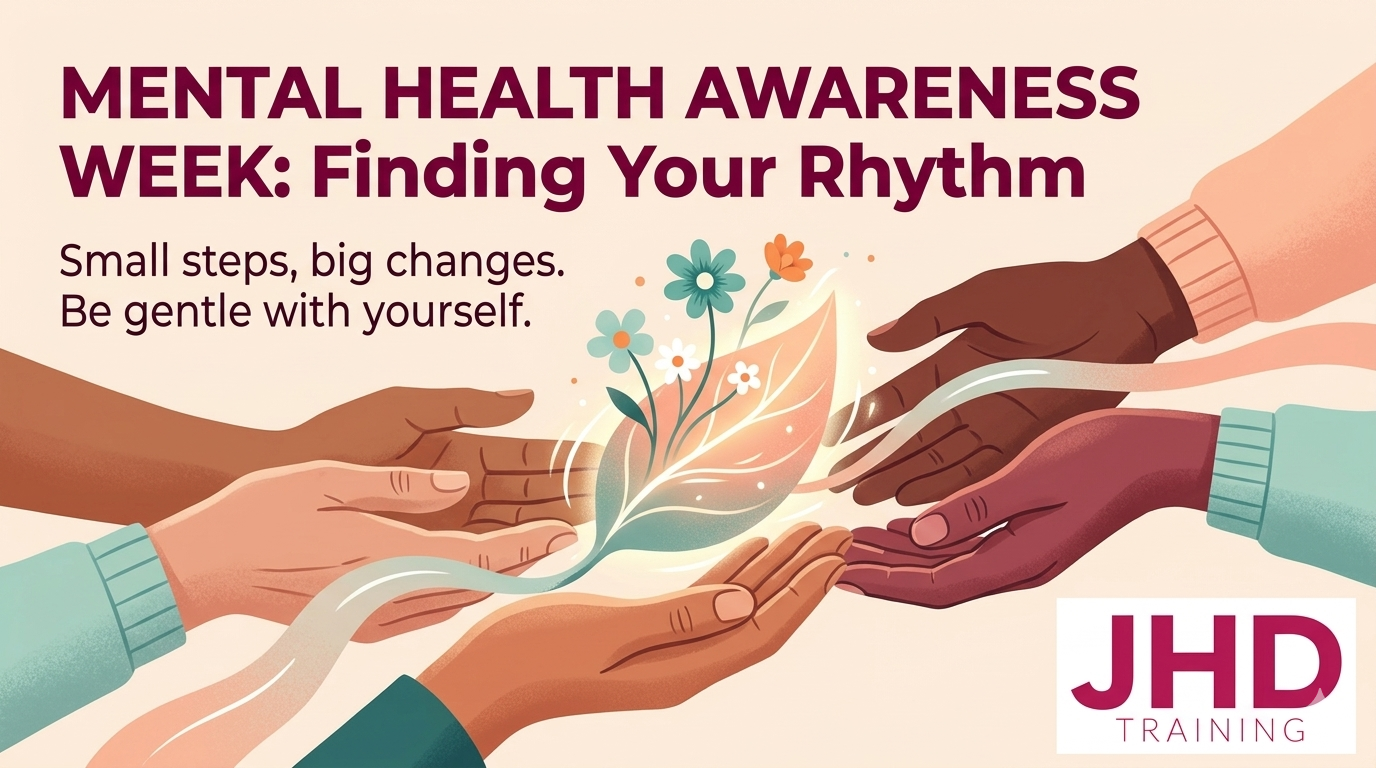
As Mental Health Awareness Week approaches, the spotlight is on a theme that connects every one of us: Finding Your Rhythm . At JHD Training, we have spent nearly a decade supporting the counselling journey of our trainees. Our constant "Outstanding" feedback from external verifiers isn't just about the professional success of our graduates; it's about the genuine care and support we prioritize for the people behind the practitioner. When life feels intense or overwhelming, it is easy to fall into a pattern of judgment—either for feeling too much or, conversely, for feeling "numb." This week, we want to lend our support to you, the public, by exploring simple, practical advice centered on Movement and Connection that helps you reclaim your pace without the weight of guilt. 1. Move for Your Mind (It's Not a Marathon) The term "movement" doesn't have to mean intense gym sessions. When you are struggling, even thinking about exercise can feel like a barrier. Overcome Motivation Slumps: If motivation is a hurdle, start with just one minute. A simple stretch, a quick walk in the garden, or even moving from your desk to a different chair counts. Grounding Through Action: Physical movement, however small, is a powerful form of grounding. It can shift you out of rumination and help reconnect your mind with the physical present. 2. The Courage to Connect Connection is another powerful pillar of well-being, yet it can be the first thing to suffer when we feel mentally exhausted. Reaching Out is Strength: The idea that you "should have it all together" is a stereotype we strive to break. If you are experiencing stress or anxiety, please reach out. Talking can prevent a feeling from escalating into silence and isolation. Listen Beyond the Words: If a loved one shares their struggle with you, your greatest gift is simply hearing their words without interruption or judgment. Being heard and validated is often the beginning of a healing path. Be Gentle with Yourself Remember, we are all human, and we all reach our limits. Healing is rarely a linear path. If your only movement today was taking a slow breath, that is a start. If you are struggling with deeper issues like the effects of trauma, please know that specialised support exists. We believe that order and compassion lead to profound growth. Find your rhythm this week, one small, gentle step at a time.